Friday, July 31, 2009
Kaohsiung Mayor Chen Chu 陳菊 -- the face of Taiwanese Identity
Here is the true face of Taiwanese Identity:
Chen Chu 陳菊, Kaohsiung's mayor, was born in I-Lan County, SanHsin Township. Like many of the SanHsin residents, she very probably has a mixture of Austronesian-Kavalan, Hoklo, and Hakka ancestry. The next time I meet her, I'll ask this question.
She helped form the magazine, Formosa, which was pushing for freedom and democracy in Taiwan. It was shut down within the year by the KMT authoritarian government who did not hold the democratic values of free speech. She was arrested and imprisoned by the KMT authoritarian dictatorship government of Chiang Ching-kuo after the international human rights day demonstration in Kaohsiung in 1979.
As mayor of Kaohsiung, she visited China and refused to use any protocol or wording that would compromise the truth that Taiwan is not part of China. Yet her visit was received and respected. She did not bow to the current emperor of China (Chinese Communist Party) in obeisance like the KMT leaders in Taiwan have done.
She showed respect to the PRC as a legitimate country. And she stood up for and demanded respect for Taiwan as a separate country.
Her hosting of the World Games in Kaohsiung has shown dignity and restraint as well as an unflinching stand for Taiwan, its people, and their human rights.
Monday, July 20, 2009
"I do not speak "Southern Min"; I am not from Fujian Province; I am Taiwanese
This from --- Hui-hông:
=======================================
我住台灣,不住閩南,不要叫我閩南人!
本土社團抗議教育部使用具侮辱性質的「閩南語」一詞
教育部國教司目前正進行九年一貫課程綱要本國語文(閩南語)之修正。儘管在各場公聽會上多數人均表示反對使用閩南語一詞,但國教司仍執意要用「閩南語」(連加上「台灣」二字都不要)一詞,我們在此表示嚴正抗議!
雖然「台語」的語言源流是從中國福建傳來台灣,但是經過數百年的本土化之後,它已經發展出具有台灣代表性的獨特語言,所以台灣人習慣將它稱為「台語」。或許仍有少數的人使用「Hō-ló語」、「閩南語」、「台灣閩南語」、「福台語」的名稱。我們尊重所有人使用不同語言稱呼的權利,但我們反對國教司在課程綱要使用違反聯合國1948年公布之《世界人權宣言》精神的「閩南語」一詞,理由如下:
根據《說文解字》的解釋,閩南語的「閩」字是蛇的意思,具有對中國閩南地區先住民及其後代歧視的意味。我們若認同聯合國《世界人權宣言》中強調種族平等的精神,就不應該繼續使用具有侮辱他人的字眼。
中國閩南地區除了講所謂的閩南語之外,也有講客語及廣東語之人口。若使用「閩南語」一詞,恐怕會導致「台語」、「客語」及「廣東語」之混淆。
所謂的閩南語,其分佈的地點不僅是福建閩南地區,還包含廣東東部、海南島、東南亞各國等等。經過在地化的歷史演變,各地方的閩南語已經不完全一樣。若一律用閩南語的稱呼,恐怕會造成語意上的混淆。
台灣人的戶籍地與長居地在台灣,不在中國閩南地區,因此不適用「閩南語」之稱呼。
中國閩南地區當地之居民絕大多數均以「廈門話」、「泉州話」「漳州話」等來互稱,幾乎不用「閩南話」之稱呼。
「台語」是專有名詞,不是「台灣語言」的簡稱。「台灣語言」包含「原住民族語」、「台灣客語」及「台語」。使用台語並不排斥其他族群語言,就如同原住民「達悟族」自稱為「達悟」(「人」的意思)並不表示其他族群都不是人。
台灣人使用「台語」或「台灣話」已有上百年之歷史。譬如,連戰的祖父連橫所著之《臺灣語典》也用台語之名稱。
我們應當尊重住民、自我族群長久以來的傳統稱呼。台語是大多數台灣人均已習慣使用的傳統稱呼,應予維護。
附件三:1996年《世界語言權宣言》(Universal Declaration of Linguistic Rights)摘錄
全文請參閱施正鋒編2002《語言權利法典》台北:前衛出版社。
Article 31第三十一條Tē Sann-tsa̍p-it Tiâu
All language communities have the right to preserve and use their own system of proper names in all spheres and on all occasions.
所有語言社群均有權在所有範疇與所有場合中保存並使用其合宜的姓名系統。
Sóo-ū ê gú-giân siā-kûn lóng ū khuân-lī tī sóo-ū ê huān-uî kap tiûnn-sóo tiong pó-tsûn pĪng-tshiánn sú-iōng in ha̍p-gî ê miâ-sènn hē-thóng.
Article 32第三十二條Tē Saⁿ-tsa̍p-jī Tiâu
1. All language communities have the right to use place names in the language specific to the territory, both orally and in writing, in the private, public and official spheres.
2. All language communities have the right to establish, preserve and revise autochthonous place names. Such place names cannot be arbitrarily abolished, distorted or adapted, nor can they be replaced if changes in the political situation, or changes of any other type, occur.
第一項 所有語言社群均有權以其區域專屬語言使用地名,無論是在口語或書寫上、在私下、公開或是官方場所。
第二項 所有語言社群均有權建立、保存、及修改其原始地名。這些地名不得被武斷地廢除、扭曲或改寫,亦不得因為政治或其他情況之改變而遭到替換。
Tē-1-hāng Sóo-ū ê gú-giân siā-kûn lóng ū khuân-lī iōng in khu-hi̍k tsuan-sio̍k gí-giân sú-iōng tē-miâ, bô-lūn sī kháu-gí ia̍h-sī su-siá, tī su-té-hā, kong-khai ia̍h-sī kuann-hong ê tiûnn-sóo.
Tē-2-hāng Sóo-ū ê gú-giân siā-kûn lóng ū khuân-lī kiàn-li̍p, pó-tsûn, kap siu-kái in ka-tī ê guân-sú tē-miâ. Tsia ê tē-miâ bē-sái iōng bú-tuān ê hong-sik huì-tî, niú-khiok, sīm-tsì kái-siá, mā bē-sái in-uī tsÌng-tī ia̍h-sī kî-tha tsōng-hóng ê kái-piàn tso-siū tio̍h thè-uānn.
Article 33第三十三條Tē Sann-tsa̍p-sann Tiâu
All language communities have the right to refer to themselves by the name used in their own language. Any translation into other languages must avoid ambiguous or pejorative denominations.
所有語言社群均有權以自己的語言稱呼自己。任何姓名的翻譯必須避免發生模糊或輕蔑的情況。
Sóo-ū ê gí-giân siā-kûn lóng ū khuân-lī iōng in ka-tī ê gí-giân tshing-hoo ka-kī. Jīm-hô miâ-sènn ê huan-i̍k pit-su pī-bián huat-sing iōng-jī hâm-hôo ia̍h-sī khin-bia̍t ê tsōng-hóng.
Article 34第三十四條Tē Sann-tsa̍p-sì Tiâu
Everyone has the right to the use of his/her own name in his/her own language in all spheres, as well as the right, only when necessary, to the most accurate possible phonetic transcription of his/her name in another writing system.
人人均有權以其語言在所有場合中使用自己的姓名,同時亦有權,在必要的情況下,以最接近其姓名發音的方式將其轉化為文字。
Lâng-lâng ū khuân-lī iōng in ka-kī ê gí-giân tī sóo-ū ê tiûnn-ha̍p sú-iōng ka-kī ê miâ-sènn. Kāng-khuán lâng lâng mā ū khuân-lī tī pit-iàu ê tsōng-hóng ê sî-tsūn, iōng tsuè tsiap-kīn in miâ-sènn huat-im ê hong-sik kā tsuán-tsò bûn-jī.
附件四:1948年聯合國《世界人權宣言》摘錄
第二條
人人有資格享受本宣言所載的一切權利和自由,不分種族、膚色、性別、語言、宗教、政治或其他見解、國籍或社會出身、財產、出生或其他身分等任何區別。並且不得因一人所屬的國家或領土的政治的、行政的或者國際的地位之不同而有所區別,無論該領土是獨立領土、托管領土、非自治領土或者處於其他任何主權受限制的情況之下。
第七條
法律之前人人平等,並有權享受法律的平等保護,不受任何歧視。人人有權享受平等保護,以免受違反本宣言的任何歧視行為以及煽動這種歧視的任何行為之害。
Friday, July 17, 2009
Finding that it is Better to Speak more than just Mandarin
Notice how Scotland is dealing with its indigenous language that has been overshadowed by the dominant English. The video is actually subtitled in Basque, a minority language in northern Spain. The video was being shown to encourage what was happening in Scotland to happen in the Basque region of Spain. There are some lessons to be learned for Taiwan.
Being Bi-lingual is Better.
There is Great Inherent Worth in Language Regeneration.
"You have people who support the language and people who feel that too much money is being spent by the Scottish government to preserve a language that is maybe dying."
"The parents here are very focused. They believe in the cognitive development associated with bilingualism."
"Here I am in my fifties and I realize what an enriching experience it has been in my life to actually have been an ... indigenous monoglot Gaelic speaker at age five."
"Gaelic is not something you should put in your pocket; Gaelic is a badge that you should be proud of."
Taiwan should follow Scotland's example by starting schools whether private or public for the native languages of Taiwan.
You can put signs on different stores -- e.g. "Taiwanese is spoken here." "Hakka is spoken here." "Tayal is spoken here." -- Write it in Mandarin, and also in the actual language.
The following phrase was taught to a foreigner recently by Zengrur Valjakas, a seminary student in the Presbyterian Church in Taiwan's Jade Mountain Seminary in Hualian. He learned his mother tongue -- not at school which only teaches Mandarin -- but in a Paiwan Presbyterian Church in Pingtung. He learned to read and write from the Paiwan Bible. He learned because his parents taught him to value the language.
"I ni machaku tiaken ta kai nua kachalishian."
Not -- able to -- I -- language -- of -- mother tongue.
"I am not able to speak my mother tongue." - Paiwan language -- kai na Paiwan
Many think of the Presbyterian Church in Taiwan as an ethnic Hoklo Taiwanese church. Everyone always says, "The Presbyterian Church -- they speak Taiwanese, right?"
Actually the Presbyterian Church in Taiwan values every language and culture in Taiwan. And they are taking steps to act on those values. In the April 2009 General Assembly meeting, a motion was passed that requires every pastor before becoming ordained to be able to: 1. Understand, 2. Speak, 3. Read, 4. Write using their mother-tongue (one of Taiwan's non-Mandarin languages.)
There is also a plan to provide teachers of each mother-tongue so classes are available in the churches of each language community in Taiwan.
At a recent symposium this summer, where there was a gathering of over 150 Presbyterian church pastors from many different languages and peoples of Taiwan, you could see that the respect was more than just words: Some of the prayers were in Amis, Tayal, Paiwan -- not just Taiwanese and Mandarin. Presumably if there were more opportunities, you would have heard prayers in Hakka and other Austronesian languages of Taiwan.
It would be good to see other institutions and businesses making the same effort to preserve Taiwan's rich cultures. Let's get other civic and community organizations to join in.
And if you wish to learn your mother tongue, perhaps you should take a walk to your nearby Taiwanese Presbyterian Church and they will put you into contact with a pastor who can speak it and teach it to you.
P.S. On this issue, another Christian group must be mentioned. The Roman Catholic Maryknoll Language Institute is to be commended. Their main campus is in Taichung, but they have a center in Taipei as well as online courses. They currently have text books for Hakka and Hoklo Taiwanese -- with the instructions and explanations in a number of languages -- including English, Korean and Mandarin. Some of the Maryknoll Priests are also fluent in some of the Austronesian languages and could serve as good contacts for any community organizations who wish to renew their community's mother tongue and develop curriculum to teach it in their local schools.
------
Another endangered language: the Northern Europe arctic Saami language -- "There are approximately 300 words to describe different types of snow and ice." "The authorities have been telling people through many many years through education, the schools, military, administration ... that the Saami language is no good. This is from the thinking that some races and countries are superior to others. This has been so strong that the parents have begun to believe that it might be dangerous, it might be no good, for the children to learn the language. And this is why the parents decided to stop teaching the children. ... now more and more people realize the wrongs -- and they are taking up to teaching the Saami language again."
See how it is being revitalized:
Thursday, July 9, 2009
Taiwan's first kingdom centered in Tainan,
Recommended reading: There is an excellent article from The View from Taiwan that we highly recommend -- it discusses research into the Hizen Porcelain trade and Taiwan's international trading kingdom of the 1600's.
Saturday, June 27, 2009
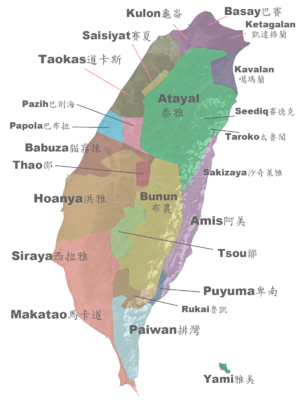
Plains-tribes Austronesians make up the majority of Taiwan's population
This week I visited the Taiwan Shop in Taipei across from National Taiwan University and I found many books about the Austronesian plains tribes that were eventually forced to assimilate with the Han immigrants under the Manchu empire. They often are called the Pingpu.
If one actually stopped to consider, almost all of the Hoklo Taiwanese and Hakka Taiwanese have Pingpu ancestry. The majority of people in Taiwan today are descendants of the Austronesian whether Pingpu or East Coast and High Mountain peoples. Why are Austronesians in Taiwan only numbered at 2 percent of the population? Did they stop having children? No. But those who lived among the Han peoples on the west coast in the past 300 years and also those moved to the cities and began going to Mandarin language schools in the past century eventually were assimilated into the dominant culture.
Some of these descendants of Pingpu peoples are trying to regain their cultural distinctives. An article in the Taipei Times this week shows how the recognized Austronesian tribes would like to welcome them, but certain government officials are trying to drive a wedge between the plains tribe Austronesian descendants and the Central Mountain and East Coast recognized tribes.
Part of the motivation may be to try to discourage identification with a non-Chinese culture because that would expand the legitimacy of Taiwan's distinct status and make it clear to the world that China has no right to claim Taiwan. Imagine if Taiwan were classified at 60 percent Austronesian (genetic studies would put the number higher). That would leave the "pure-blood" Han Chinese as an ethnic minority and people would start thinking of Taiwan as they think of Malaysia or Indonesia that has a large ethnic Chinese minority. No one believes China has a right to claim these countries.
Also found at the Taiwan Shop was a new work in the plains-tribe Austronesian Siraya language published in 2002 by Edgar Macapili. Mr. Macapili writes his own version of the story of Noah's Ark in the Siraya language, called "Ta Avang ki Noe-an." The book also carries Mandarin and English translations. His story concludes with a hopeful tone of a new earth to live in. One can understand this hope in the hearts of the assimilated Pingpu plains Austronesian tribes: that one day they may walk this land with the names and languages of their ancestors instead of always being under a forced alien culture and language.
I quote the opening:
Both at the Taiwan Shop and at the nearby SMC Publishing there are dictionaries of some of the plains tribe languages now almost lost -- including Siraya (Sinkang dialect), Pazeh, etc. Also there are many language resources for the Austronesian languages in Taiwan -- all of them are endangered because of the government of Taiwan's insistence on using Mandarin as the only language of instruction in the public schools.
Ma Ying-jeou, Taiwan's current president, has moved recently to downgrade even the one-hour per week "local" language class. Now these classes have been classified as extra-curricular languages -- like foreign languages and have been put into competition with English. Faced with the decision of whether to have one's child learn English or some rapidly disappearing language, what would most parents in Taiwan choose? Without actually abolishing the classes, Ma's government has taken steps to destroy them. Without a consistent steady class offering, those language teachers who teach these local languages will not be able to earn enough to make a living and so basically there will be fewer teachers able to teach the languages in future years as we begin to see losses from the current group of language teachers.
What needs to happen is what happens in Ireland and Wales: Elementary schools for each township with its local language should be offering at least half of all academic instruction in the local language. Signs in the communities should be bi-lingual -- the local language and also Mandarin. These non-Mandarin languages and cultures need to be shown respect.
------
The following video shows Edgar Macapili's performance of a Siraya song, "Spring forth Siraya":
Pictures from the 2008 Siraya conference: (You'll notice how the Siraya from this township had already taken on many of the dominant Han culture -- Hoklo's -- cultural elements including architecture and way of life:
News report on the Siraya dictionary compilation. The language had been basically extinct with the Siraya people using Hoklo Taiwanese. TITV reports that the only extant remnant of the language was that a few old folks remembered a few expressions in Siraya.
Children's Choir singing in Siraya:
On their fight for recognition. (Notice that many in their discussion are speaking Taiwanese and Mandarin.)
One Siraya interviewee said that the government's "Council for Indigenous People" under the current Ma administration has a function to "eliminate" indigenous people. Some Seediq peoples and other recognized Austronesian groups joined the protest. One of the Pazeh Pingpu people also was interviewed:
If one actually stopped to consider, almost all of the Hoklo Taiwanese and Hakka Taiwanese have Pingpu ancestry. The majority of people in Taiwan today are descendants of the Austronesian whether Pingpu or East Coast and High Mountain peoples. Why are Austronesians in Taiwan only numbered at 2 percent of the population? Did they stop having children? No. But those who lived among the Han peoples on the west coast in the past 300 years and also those moved to the cities and began going to Mandarin language schools in the past century eventually were assimilated into the dominant culture.
Some of these descendants of Pingpu peoples are trying to regain their cultural distinctives. An article in the Taipei Times this week shows how the recognized Austronesian tribes would like to welcome them, but certain government officials are trying to drive a wedge between the plains tribe Austronesian descendants and the Central Mountain and East Coast recognized tribes.
Part of the motivation may be to try to discourage identification with a non-Chinese culture because that would expand the legitimacy of Taiwan's distinct status and make it clear to the world that China has no right to claim Taiwan. Imagine if Taiwan were classified at 60 percent Austronesian (genetic studies would put the number higher). That would leave the "pure-blood" Han Chinese as an ethnic minority and people would start thinking of Taiwan as they think of Malaysia or Indonesia that has a large ethnic Chinese minority. No one believes China has a right to claim these countries.
Also found at the Taiwan Shop was a new work in the plains-tribe Austronesian Siraya language published in 2002 by Edgar Macapili. Mr. Macapili writes his own version of the story of Noah's Ark in the Siraya language, called "Ta Avang ki Noe-an." The book also carries Mandarin and English translations. His story concludes with a hopeful tone of a new earth to live in. One can understand this hope in the hearts of the assimilated Pingpu plains Austronesian tribes: that one day they may walk this land with the names and languages of their ancestors instead of always being under a forced alien culture and language.
I quote the opening:
"Ka si-uru-uru tu naunamu ki way k'ata, nipey-ring-ey pa-ilpugh ta ti Alid ki vulu-vulum ka nay apa. Ni pakavantaw tin k'ana ta imεd ki kamamangka aku-kawagh-εn: ki irang, usi-using apa, ni-maran, ni-munonang ka ni-saw-abigh-apa. Ni murila ka pa-kaw'h-'mha-ato k'ana tu purugh tumang ka na vavare ki mariang-amighki vare, ka ududo ki matikanagh ku ralum."
The name for God is: "Meirang Alid"
English: "In the beginning God made heaven and earth. He filled it with life that jump, walk, hop and fly; green, red, short, long, circle and all kinds of colors and shape. They all dwelt and grew in the land where blew fresh cool breezes and flowed clean ocean water. Blossom and fragrance of grasses filled the air. There were sweet as well as sour fruits, also all kinds of vegetables grew in different seasons. All things were good and beautiful."
... [full text; this story was turned into a musical to be performed at schools; see the song lyrics; blog of the struggle of the Siraya people]
Both at the Taiwan Shop and at the nearby SMC Publishing there are dictionaries of some of the plains tribe languages now almost lost -- including Siraya (Sinkang dialect), Pazeh, etc. Also there are many language resources for the Austronesian languages in Taiwan -- all of them are endangered because of the government of Taiwan's insistence on using Mandarin as the only language of instruction in the public schools.
Ma Ying-jeou, Taiwan's current president, has moved recently to downgrade even the one-hour per week "local" language class. Now these classes have been classified as extra-curricular languages -- like foreign languages and have been put into competition with English. Faced with the decision of whether to have one's child learn English or some rapidly disappearing language, what would most parents in Taiwan choose? Without actually abolishing the classes, Ma's government has taken steps to destroy them. Without a consistent steady class offering, those language teachers who teach these local languages will not be able to earn enough to make a living and so basically there will be fewer teachers able to teach the languages in future years as we begin to see losses from the current group of language teachers.
What needs to happen is what happens in Ireland and Wales: Elementary schools for each township with its local language should be offering at least half of all academic instruction in the local language. Signs in the communities should be bi-lingual -- the local language and also Mandarin. These non-Mandarin languages and cultures need to be shown respect.
The following video shows Edgar Macapili's performance of a Siraya song, "Spring forth Siraya":
Pictures from the 2008 Siraya conference: (You'll notice how the Siraya from this township had already taken on many of the dominant Han culture -- Hoklo's -- cultural elements including architecture and way of life:
News report on the Siraya dictionary compilation. The language had been basically extinct with the Siraya people using Hoklo Taiwanese. TITV reports that the only extant remnant of the language was that a few old folks remembered a few expressions in Siraya.
Children's Choir singing in Siraya:
On their fight for recognition. (Notice that many in their discussion are speaking Taiwanese and Mandarin.)
One Siraya interviewee said that the government's "Council for Indigenous People" under the current Ma administration has a function to "eliminate" indigenous people. Some Seediq peoples and other recognized Austronesian groups joined the protest. One of the Pazeh Pingpu people also was interviewed:
Labels:
Austronesian,
language policy,
languages,
Noah's Ark story,
Pazeh,
Siraya
Monday, May 18, 2009
International Media convention on describing the China-Taiwan historical relations causes confusion
If you read here an update on James Van Der Beek, the star of the upcoming movie Formosa Betrayed, you can begin to understand why so many around the world are still confused about Taiwan's situation.
Undoubtedly, the reason the reporter stated "30,000 Taiwanese were killed in a revolt against their Communist Chinese rulers" is because the international media repeat ad nauseum the false statement that Taiwan and China split amidst a civil war in 1949. So someone who keeps reading that in every single news story about China-Taiwan relations will hear about a 228 massacre and assume that it occurred during the "Chinese Civil War" and assume that the Communists killed the Taiwanese then and that the Taiwanese were revolting against their rule, thereby created a civil war.
You see, to state "Taiwan and China split amidst a civil war in 1949" is to cause people to think about a situation like Sri Lanka and the Tamil Tiger rebels. But this whole perspective is completely incorrect.
A better analogy would be the Nazis versus the Soviets and the innocent bystanders who got caught in the cross-fire. The fascists in China fought against the communists in China in a civil war. Taiwan had no part in it. The fascists lost the war, probably because they were more corrupt in their governance of the territory in China they controlled. These fascists are the "Chinese Nationalist Party" regime of Chiang Kai-shek. They were evacuated by the American navy to Taiwan, a Japanese colonial territory left over from World War II, and there these fascist Chinese exiles then proceeded to seize power, murdering any potential Taiwanese opposition. In the 228 Massacre they killed tens of thousands of Taiwanese. They set themselves up as a very oppressive (think Stalin-Hitler-Mao-Pinochet type) elitist authoritarian regime ruling Taiwan with violence while effectively presenting a face of a supposedly democratic "Free China" to the rest of the world.
Instead of lazily continuing to repeat the fictional propaganda out of China (that the two sides supposedly "split amidst a civil war"), the international media must come up with a new convention to actually accurately reflect the historical reality.
Sunday, May 17, 2009
Subscribe to:
Posts (Atom)